Connecting physical resilience to financial value.
Climate resilience needs to scale. And it’ll only happen when resilience becomes visible, measurable, and built into cover. That’s what we’re building: an insurer that writes flood cover where nature-based risk reduction is built in from day one. We identify where resilience potential exists across a portfolio, model what it could deliver, and then link verified performance directly to how your policy is structured and priced.
Hidden in plain sight.
There’s a bias in how we think about flood resilience. We picture large-scale infrastructure: retention ponds, engineered barriers, major civil works. The kind of projects that require years of planning and millions in capital.
But across every industrial portfolio, something else exists. Thousands of small spaces doing nothing. The strip along the yard perimeter. The car park that drains to the road. The low point at the back of the storage area. The roof section above the production floor.
These spaces are everywhere. And they’re exactly where nature-based solutions work best.
A rain garden at the site edge. Permeable surfaces in the car park. A detention basin at the drainage point. Individually, each one seems too small. But combined and verified to a standard underwriters accept, they can change how flood risk on that site is priced.
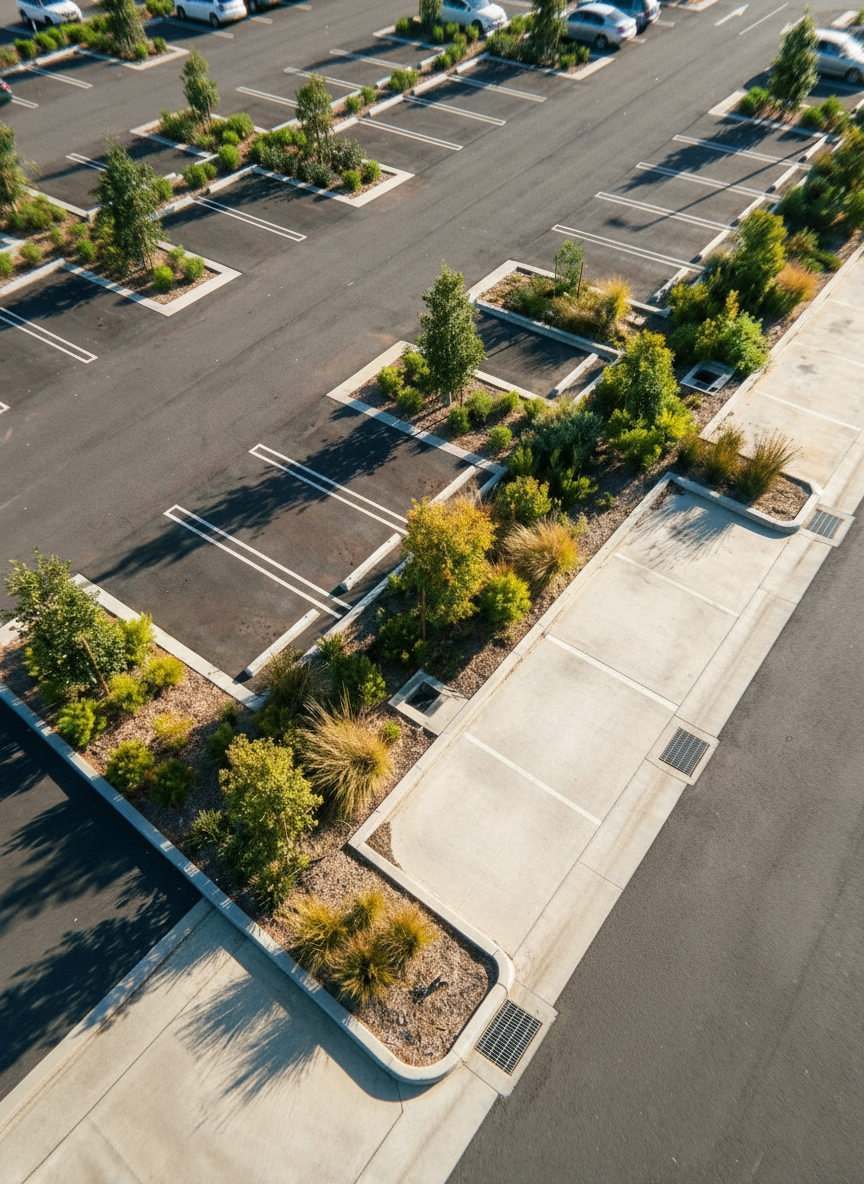
That’s the gap we’re filling: visibility of what’s possible, verification of what’s been done, and insurance value that moves when your portfolio performs.
Flood cover designed for resilience.
The commercial property insurance market is splitting in two. In one direction: continued withdrawal, escalating premiums, gaps in cover. In the other: a new category of insurance that prices risk as something you actively reduce. If your portfolio has flood exposure, the kind that’s already showing up in your renewal conversations, find out what we can offer.